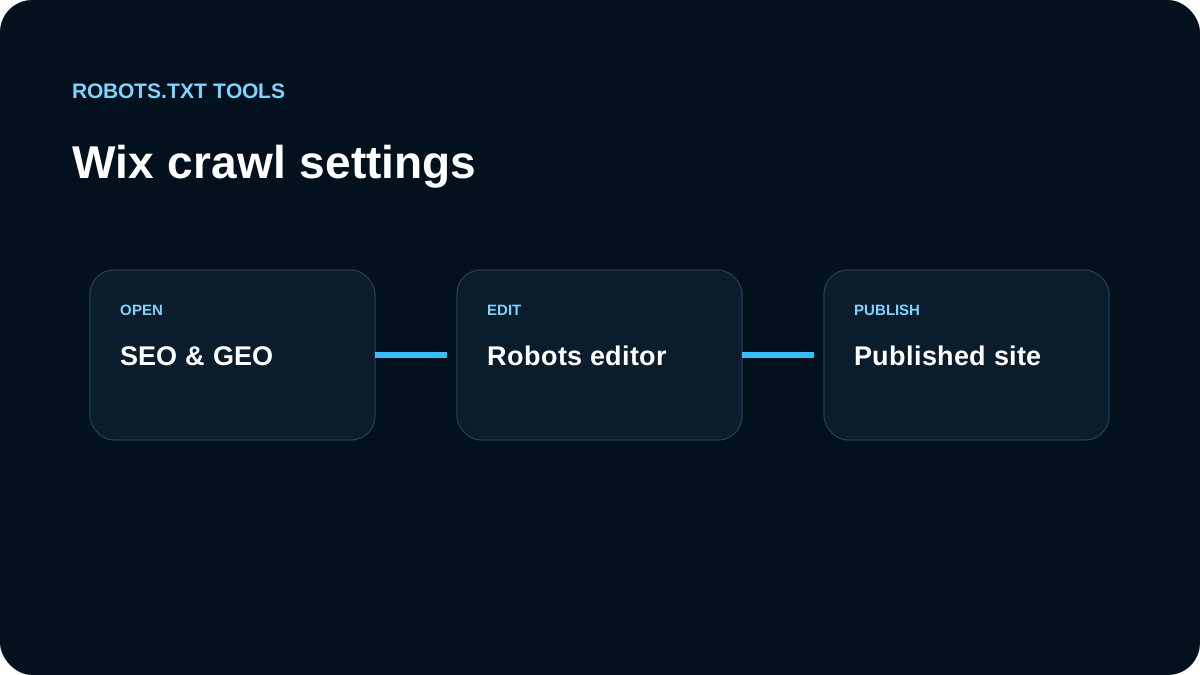
In Wix, we start with the platform controls rather than looking for a repository file. The current workflow is under SEO & GEO → Tools and settings → Robots.txt Editor.
We inspect the live file first
Before editing, we open the site's public /robots.txt. This tells us what crawlers actually receive and gives us a baseline before touching platform settings.
We change only rules we can explain
The Robots.txt Editor can override platform defaults, so broad rules deserve caution. We test paths before and after a change and avoid copying generic blocklists that do not match the site's URL structure.
User-agent: *
Disallow: /example-private-path/
A path like that should exist for a clear crawl-control reason, not simply because it appeared in another site's file.
Reset to Default is part of the recovery plan
Wix exposes Reset to Default. We treat that as useful operational safety: when a custom file has accumulated uncertain rules, comparing with the default can be safer than adding another exception.
We separate page indexing from robots.txt
If the requirement is to keep a public page out of search, we review Wix page-level indexing/noindex controls. Blocking the page in robots.txt can prevent a crawler from reading noindex, so crawl control and indexing control must remain separate.
Protected pages are an access-control problem
Password-protected or members-only content should rely on Wix access settings, not on a public Disallow entry. Robots.txt is not authorization.
We publish and verify
After saving, we open the live file again and run it through the robots.txt validator. For specific URLs, we use the tester and confirm the winning rule.
Our Wix checklist
- open the live
/robots.txt; - review SEO & GEO → Tools and settings → Robots.txt Editor;
- understand the current default before adding custom rules;
- use Reset to Default when custom history is uncertain;
- use page-level noindex for indexing decisions;
- keep password/member protection separate from crawler rules;
- verify production after every change.
Wix makes the file editable, but the platform still owns important defaults and indexing controls. We work with those boundaries instead of treating Wix like a hand-managed server.