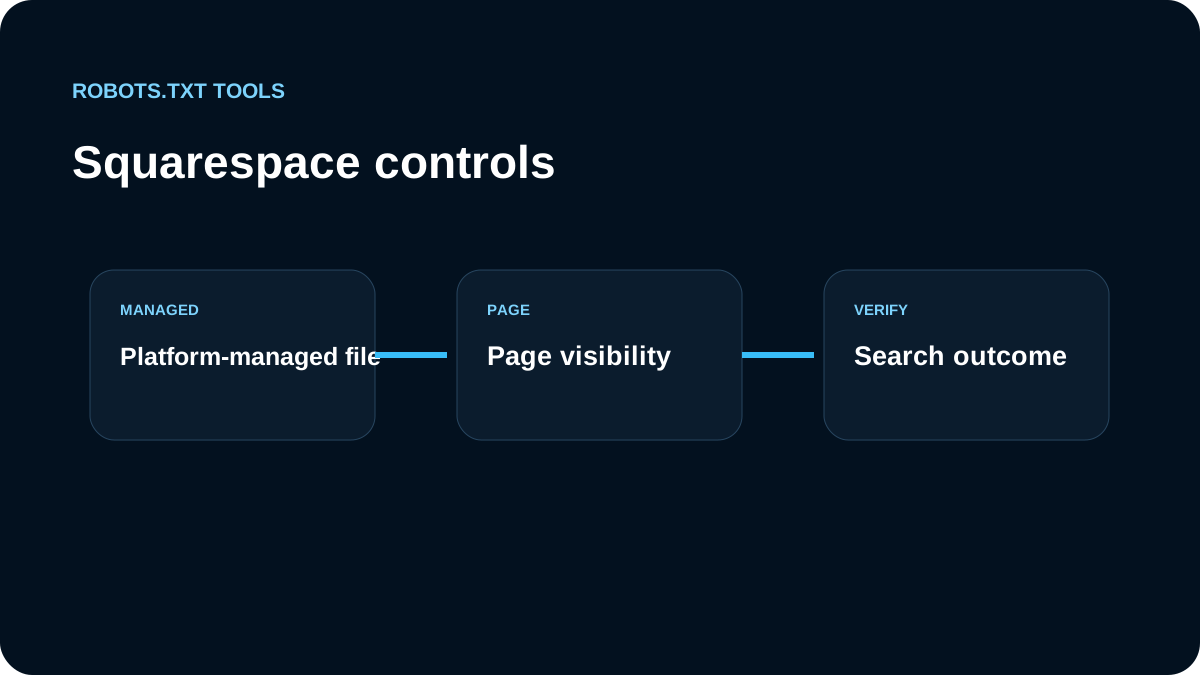
Squarespace is different from a server where we freely maintain a raw robots.txt file. We treat the platform as the owner of the generated policy and use the controls Squarespace actually exposes.
We inspect expected platform exclusions
Squarespace can include platform-managed exclusions such as /search. We do not assume every disallowed path is an SEO mistake. First we identify whether the line is a normal platform behavior or a setting we changed.
Crawlers settings control broad search access
Current Squarespace settings include Crawlers controls for hiding a site from search crawlers. We use those settings deliberately and confirm what they change on the public site rather than inventing unsupported raw-file edits.
Page-level noindex handles individual pages
If one public page should stay out of search, we use the relevant page-level indexing/noindex option. This is more precise than trying to block an entire path through a platform-managed robots file.
The sitemap is automatic
Squarespace creates a sitemap automatically. We open it directly, check that it reflects the intended public site, and avoid treating it as a manually edited XML inventory. The fact that the sitemap is automatic does not remove the need to verify canonical and indexable URLs.
We avoid fighting the platform
A common failure pattern is following a generic robots.txt tutorial that assumes unrestricted file-system access. On Squarespace, we instead ask which setting expresses the requirement: whole-site crawler visibility, page-level noindex, password protection, or normal platform defaults.
We verify the live behavior
We open /robots.txt, inspect /sitemap.xml, and test representative URLs. Our robots.txt checker helps confirm the delivered policy, while the tester helps explain whether a specific URL is allowed for a crawler.
Our Squarespace checklist
- inspect the generated robots.txt before changing settings;
- recognize expected
/searchhandling; - use Crawlers settings for broad site-level search visibility;
- use noindex/page settings for individual pages;
- rely on real password/access controls for private content;
- verify the automatic sitemap;
- recheck production after publishing.
The safest Squarespace strategy is to work through supported platform controls and verify their output instead of trying to force a raw-file workflow the platform does not expose.