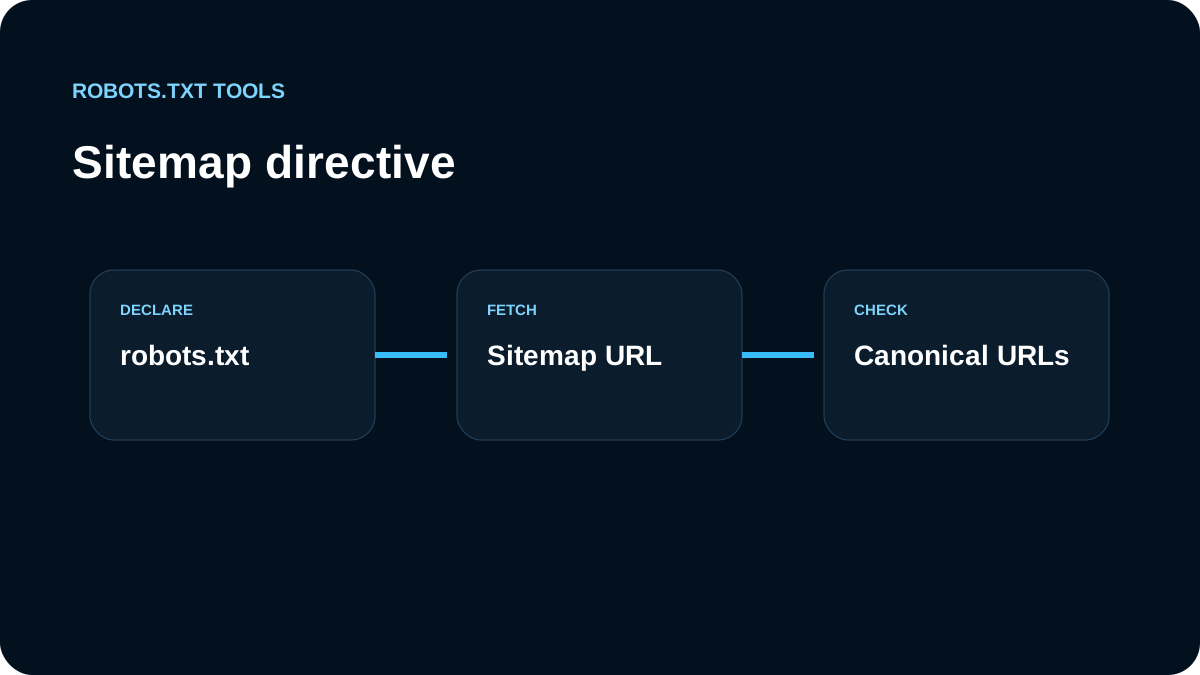
When we review a robots.txt file, we treat Sitemap: as a discovery reference, not as an Allow or Disallow rule. The goal is simple: give crawlers a stable absolute URL for the sitemap that represents the production site.
We verify the sitemap before advertising it
Before changing robots.txt, we open the sitemap itself. We confirm that it loads successfully, contains canonical public URLs, uses the intended HTTPS host, and is not an old staging or migration artifact. For large sites, a sitemap index is often easier to maintain than a long list of child files.
Sitemap: https://example.com/sitemap.xml
We use a fully qualified URL rather than a relative path such as Sitemap: /sitemap.xml.
Multiple Sitemap lines are valid
If the architecture genuinely uses independent sitemap files, multiple declarations are reasonable:
Sitemap: https://example.com/sitemap-pages.xml
Sitemap: https://example.com/sitemap-products.xml
Sitemap: https://example.com/sitemap-posts.xml
When those files already sit behind a stable sitemap index, we usually reference the index instead. That keeps robots.txt from becoming a second inventory that must be updated every time a child sitemap changes.
We keep discovery separate from crawler groups
For readability, we normally keep Sitemap: declarations outside the visual block of User-agent, Allow, and Disallow rules:
User-agent: *
Disallow: /internal-search/

Sitemap: https://example.com/sitemap.xml
The important point is semantic: the sitemap declaration does not grant crawling permission and does not override a Disallow rule.
Cross-host and subdomain setups need deliberate checks
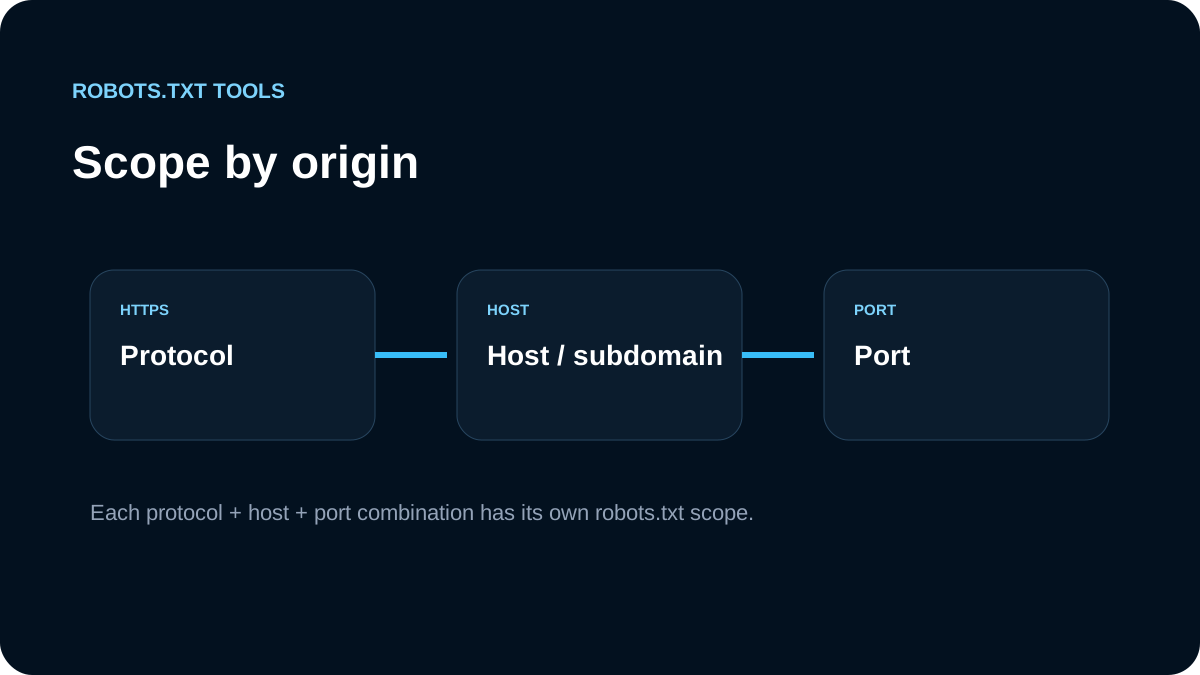
A sitemap can be served from another host, but we do not copy a CDN or shared sitemap URL without confirming that it represents the intended property. We also remember that robots.txt is scoped by origin. https://example.com/robots.txt and https://shop.example.com/robots.txt are separate files, so we inspect each important host rather than assuming one declaration covers every subdomain. See our subdomain scope guide for that boundary.
Search Console remains useful
A Sitemap: line helps discovery; it does not replace Search Console. When the property is available, we submit or inspect the same sitemap there to see whether Google can fetch and process it. A syntactically correct robots.txt line cannot fix a sitemap full of redirected, non-canonical, noindex, or dead URLs.
We verify production after publishing
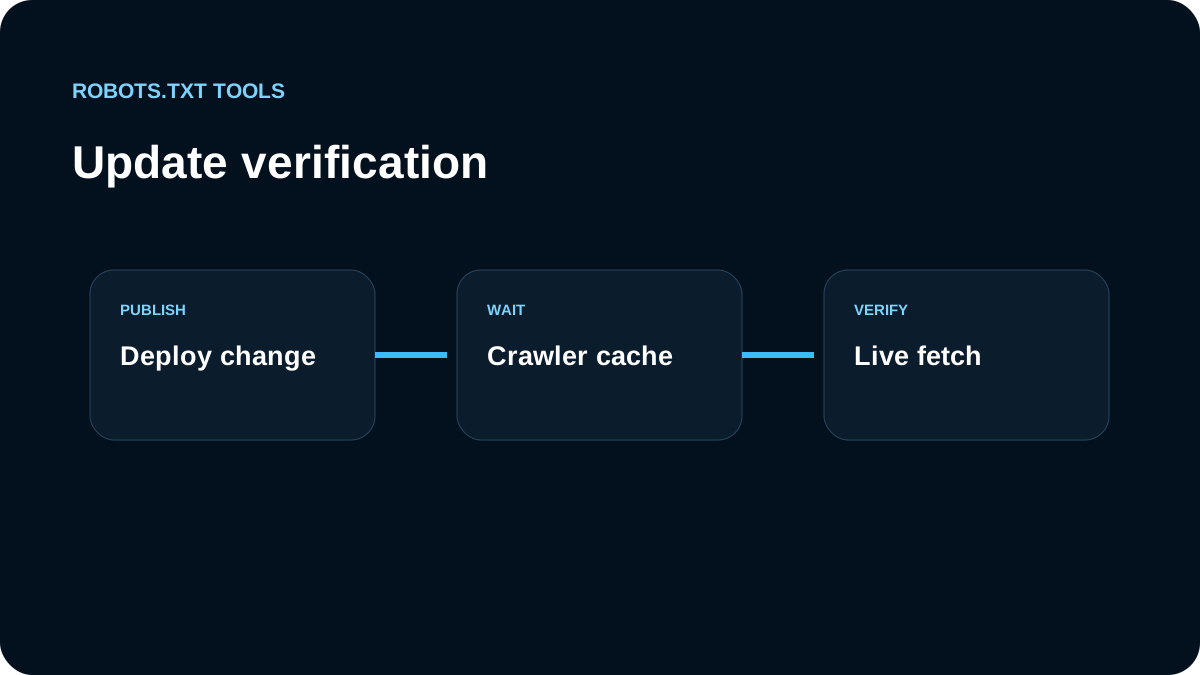
Our release sequence is:
- open
https://example.com/robots.txt; - confirm every
Sitemap:line uses the expected absolute URL; - open every referenced sitemap;
- sample canonical, indexable URLs from the XML;
- check the live file with the robots.txt checker;
- validate the full file with the robots.txt validator;
- test crawl rules separately with the robots.txt tester.
We also account for crawler caching. If production serves the correct file but a crawler still appears to use older rules, we diagnose cache state before making another edit.
Our default recommendation
Use one stable sitemap or sitemap-index URL when possible, keep it canonical and production-safe, and treat the robots.txt declaration as a discovery hint rather than a substitute for sitemap quality. That gives crawlers a clear path to the XML without mixing sitemap maintenance with crawl-permission logic.